What is Jewelry Memo Inventory? Complete Guide for Retailers & Suppliers
What Is Jewelry Memo and How Does It Work?
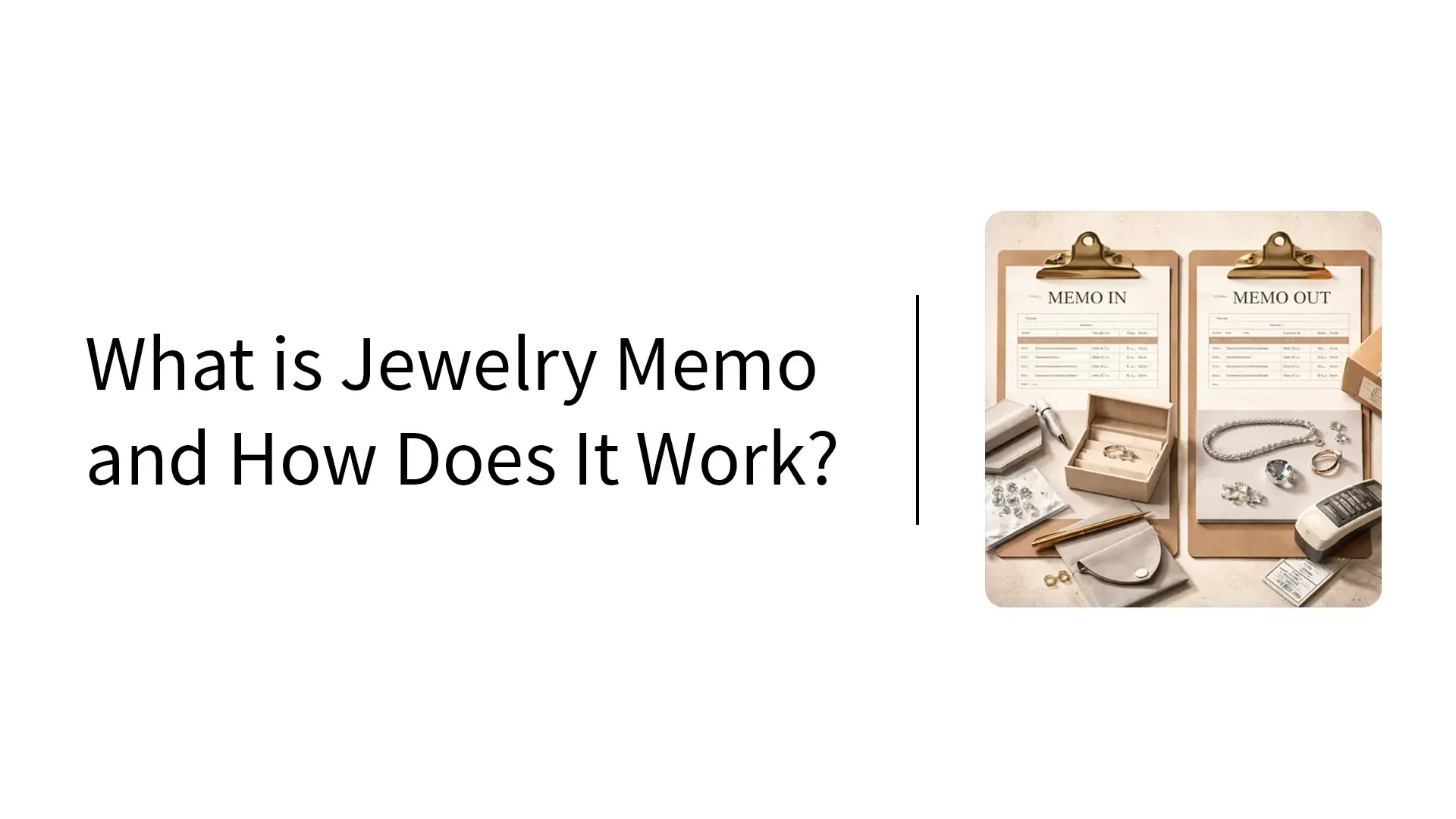
A jewelry memo (short for memorandum) is an arrangement where a wholesaler or supplier provides jewelry to a retailer without requiring upfront payment. The retailer displays and sells the items, pays the supplier only when pieces sell, and returns unsold goods after an agreed timeframe (typically 30 to 90 days).
The supplier retains ownership until items are sold and paid for. Think of it as inventory on loan: retailers get access to products they couldn’t otherwise afford to stock, and suppliers get their goods in front of more customers.
Memo vs. Consignment: What’s the Difference?
In the jewelry industry, these terms are used interchangeably. Both describe the same arrangement: goods placed with a retailer where ownership stays with the supplier until sale.
For practical purposes, they mean the same thing in the jewelry business.
The Memo Transaction Lifecycle
Here’s how a memo moves through the process:
- Agreement: Both parties sign a memo agreement outlining terms, values, insurance requirements, and return deadlines
- Receipt: Retailer receives goods and logs them as memo items (not owned inventory)
- Display: Memo items go into showcases alongside owned inventory
- Sale or Return: When items sell, retailer pays supplier; when memo period ends, unsold items go back
- Reconciliation: Both parties verify all items are accounted for
Benefits for Retail Jewelers (Memo-In)
For retailers, memo is one of the most powerful tools for growth without proportional capital investment.
Improved Cash Flow
You don’t pay until it sells. A retailer can display $500,000 worth of memo diamonds while keeping that capital available for rent, payroll, or marketing. This is especially valuable for seasonal businesses, new stores without deep reserves, and those looking to grow their in-person catalogs or sell jewelry online without major upfront investments.
Reduced Risk
Precious metal and diamond prices fluctuate. When you own inventory, you bear the risk of price drops. With memo, that risk stays with the supplier.
Expanded Selection
Customers expect variety. Memo lets you offer broader selection than your capital allows. Instead of owning 50 engagement rings at $3,000 each, you might own 15 and supplement with 35 memo items.
Test New Products
Not sure if a new style will resonate? Memo lets you test without commitment. Bring in a selection, see what sells, and make buying decisions based on actual customer response.
Access Higher-Value Pieces
Few independent jewelers can afford to own a $100,000 diamond. Memo arrangements let you show — and sell — pieces far above your typical price point.
Benefits for Wholesalers and Suppliers (Memo-Out)
Suppliers who master memo programs gain significant advantages too.
Broader Product Placement
Every retailer carrying your goods on memo extends your showroom. Instead of inventory sitting in your vault, it’s in showcases being shown to customers daily.
Faster Turnover
Products get in front of end consumers faster. A piece that might sit for months waiting for an order could sell within weeks when placed with the right retail partner.
Stronger Relationships
Offering memo builds loyalty. Retailers remember suppliers who help them grow without demanding large upfront purchases and often place larger owned-inventory orders as trust develops.
Market Intelligence
Memo programs reveal what sells, what doesn’t, which retailers perform, and which markets are strong. This data informs your own buying and production decisions.
What to Include in a Memo Agreement
A handshake isn’t enough. Every memo agreement should address:
Ownership and Title
Clear statement that ownership remains with the supplier until sold and paid for. The retailer acknowledges goods are held in trust.
Payment Terms
- When payment is due (upon sale, within 7 days, monthly?)
- Payment method (wire, check, ACH)
- Price basis (fixed or market-adjusted)
Return Policies
- How long items can remain (30, 60, 90 days?)
- Extension process
- Return shipping (who pays, what insurance)
- Condition requirements
Insurance Requirements
- Minimum coverage (usually full replacement value)
- Policy type (jewelers block insurance)
- Supplier named as loss payee
- Certificate provided before goods ship
Legal Protections
Consider UCC-1 filings to protect memo goods in case of retailer bankruptcy. Without proper filing, memo goods may be treated as retailer property if they go under. This is especially important for suppliers with significant memo exposure.
Memo Management Best Practices
Effective memo management separates profitable jewelers from those drowning in chaos.
Track Everything by Vendor
Your consignment inventory tracking system should instantly answer:
- How many items on memo from each vendor?
- Total memo value outstanding per vendor?
- When is each memo due?
- Which items have been here longest?
Never mix memo records with owned inventory.
Set Up Deadline Reminders
Missed deadlines damage relationships and can trigger purchases you didn’t intend. Build a reminder system to ensure you send payments or return items on time.
Reconcile Regularly
Audit your memos on a monthly, quarterly, and/or annual basis to ensure everything lines up.
Track Performance Metrics
For retailers: Sell-through rate, average days to sale, margin on memo items, vendor comparison.
For suppliers: Placement rate, sell-through by retailer, return rate, days outstanding.
Communicate Proactively
Update vendors when showing pieces to serious buyers, give feedback on what’s not selling, pay on time or request extensions early.
Common Memo Mistakes to Avoid
Missing Return Deadlines
Items sit past their period, and you’ve accidentally “bought” inventory you didn’t want. Fix: Systematic deadline tracking with multiple reminders.
Poor Documentation
Relying on paper slips that get lost. Fix: Log every memo item in your inventory system immediately upon receipt.
Mixing Memo with Owned Inventory
Staff can’t tell which items are memo, causing pricing errors and reconciliation nightmares. Fix: Clear tagging that identifies memo items at a glance.
Unclear Terms
Assumptions about markup, payment timing, or return shipping lead to disputes. Fix: Written agreements that address every scenario.
How Uploadify Makes Memo Management Effortless
Managing memo with spreadsheets and paper slips leads to errors, missed deadlines, and damaged relationships.
Modern jewelry businesses need purpose-built memo inventory software designed specifically for jewelry inventory management.
Memo-In Features for Retailers
Uploadify makes receiving and tracking memo inventory simple:
Log memo items instantly: When you receive goods on memo, add them to your inventory in seconds. Record the vendor, due date, and origin (in-store delivery, jewelry show, etc.), plus any notes you need.
Track what you owe: See outstanding memo balances by vendor, payments you’ve made, and what’s still due — all in one dashboard.
Monitor status and deadlines: View all your memo-ins in one place, sorted by status: open, closed, or overdue. Never miss a return deadline or accidentally “buy” inventory you meant to send back.
Understand your numbers: See costs, sales, and potential profits across your memo inventory at a glance.
Let AI do the data entry: Upload a PDF of the memo you received, and Uploadify’s AI extracts the details automatically:
- Vendor’s memo number, product SKUs, titles, descriptions, and costs
- Vendor contact info (name, email, phone, website)
- If the vendor already exists in Uploadify, it’s auto-selected. If not, you can add them to your CRM with one click.
No more manual entry from paper slips. No more tracking memos in spreadsheets. Everything lives in one inventory system.
Memo-Out Features for Wholesalers and Dealers
Uploadify gives you complete control over goods you send out on memo:
Create memos in minutes: Build professional memos with all the details you need: origin (store, trade show), who’s handling it, due date, and notes. Search your existing customer and vendor database or add new contacts without leaving the memo screen.
Flexible pricing for any situation: Add products and choose which price to display: retail, wholesale, memo, or cost. Need a one-off item that’s not in your inventory? Add non-stock products on the fly. Adjust prices or apply discounts as needed.
Handle taxes the right way: Switch between tax and shipping profiles, including no-tax options for dealer-to-dealer transactions. No manual overrides required.
Share professionally: Email, print, or send private links to beautifully branded memo PDFs. Include your legal policy and signature lines — everything looks polished and protects your interests.
Track payments and balances: Log payments as they come in and see outstanding balances at a glance. Know exactly who owes you what, and when.
Manage everything from one dashboard: View all outgoing memos in one place, sorted by date or status (open, overdue, closed). See your total receivables instantly. No more digging through files or spreadsheets.
Key Takeaways
- Memo = inventory without upfront payment. Retailers pay only when items sell and return unsold pieces. Suppliers retain ownership until sale.
- Both sides benefit. Retailers get expanded selection and preserved cash flow; suppliers get broader placement and faster turnover.
- Written agreements are essential. Cover ownership, payment terms, return policies, insurance, and legal protections. If it’s not in writing, it doesn’t exist.
- Track meticulously. Every memo item needs to be logged, tagged, and monitored with deadline reminders. Poor tracking leads to lost money and damaged relationships.
- Use purpose-built software. Spreadsheets and paper slips can’t handle the complexity of memo management. Modern jewelry inventory systems like Uploadify make tracking seamless.